
We hope your your summer is going well and you’re coping with the successive heatwaves. We’ve just shared this update by email to those on our mailing list, which we hope to do regularly through these news bulletins. If you’d like to join the mailing list you can add your details easily through the page below.
Forthcoming CPD events
Working with Challenging Scenarios in CAT – 14th September 2026, Manchester
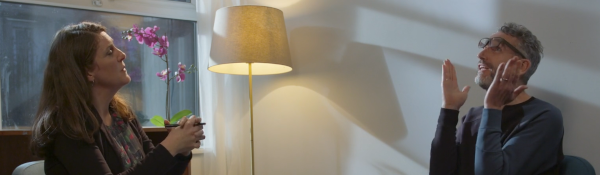
There are still places available on this day workshop with Kathryn Pemberton and Rhona Brown. The day provides an opportunity to explore and work on a range of challenging clinical scenarios, making use of a number of the second set of Training Films produced under Kathryn’s direction. The films depict scenarios involving state shifts, endings, rupture related to values, and strong countertransference reactions. They were improvised within some guidelines set by the working group led by Kathryn.
On reflecting on her role playing a therapist in one of the films, Jo Coggins shared a little about the challenge of articulating what is generally an internal and private commentary, when strong countertransference feelings are evoked in a therapist. She noted:- “Even when we are just acting, or even rehearsing, it’s interesting what strength of emotions can flood in… Stilling what comes up enough to see past it, and use it in CAT, is certainly a challenge. Over the years I’ve learned to trust the model, and make use of that map which I find can make such a difference in making sense of something powerful and disturbing.”
To find out more and book a place on this day, go to Working with Challenging Scenarios in CAT
Effective and Respectful CAT with Neurodivergence – Day 1: Getting Started – 18 November, Manchester
This is the first of two linked days on recognising and working with forms of neurodivergence in CAT. Rachel Beckford and Lesley Taylor led a similar day first in 2024, from which they have developed this workshop. You will learn about current understandings of autism and ADHD, aiding your recognition of more subtle or ‘unseen’ presentations of neurodivergence in therapy, including high masking. Using clinical material, discussion and practical group exercises, Day One will explore possible reciprocal role patterns associated with trauma, exclusion and misunderstanding. These may be aspects of neurodivergent experience, and may be misread in therapy. The day aims to aid understanding and integration within formulation and the CAT map.
We hope to be able to announce the date and details for the second of these workshops soon, co-led by Emma Chorlton. Day Two will build on the current workshop but with more focus on applying these ideas in ongoing CAT therapy. There will be further space in the second day to consider relational patterns, pacing, rupture and repair, endings, and adaptations to the therapy process.
More details and booking options for Day One will be published shortly. Check back on the Forthcoming Events page for the live link.
Update: This event is now open for bookings at Effective and Respectful CAT with Neurodivergence – Day 1: Getting Started
CAT Supervisor Training Workshop – 26/27 November, Manchester
This in-person two day workshop is a non-residential offer to those wishing to fulfil Module 2 of the ACAT Supervisor Training pathway. This year it is led by Mark Evans and Dawn Bennett. It is particularly designed for CAT Practitioners/Psychotherapists wishing to become an ACAT Accredited Supervisor. Experienced CAT supervisors are also welcome to attend, to look more intensively at their practice as part of their own CPD.
Call for New CAT Supervisors
 Accompanying the announcement of this workshop is a Call for New CAT Supervisors. This article explains how the much-welcomed expansion of CAT training in the last few years needs to be underpinned by expansion in training resources, including the pool of accredited supervisors who support trainees as they work towards qualification. If you’re contemplating taking this next step, but are curious about what benefits will follow your efforts in undertaking this additional training and running your own group, consider the following:
“…new CAT supervisors say that they really value offering supervision. What they anticipated would be mainly challenging has been mainly rewarding. For many they are surprised that it has become the best part of their week. The training, especially running the training group and supervision at all levels afterwards:
- allows you to recognise and appreciate your own growing competence in the model, helping you ‘know what you know’ and feel more confident in that;
- helps you see what you’re not sure about, and to grow through exploring ideas along with your supervisees, as well as through your own CPD or supervision;
- brings you into contact with, and refreshed by, the enthusiasm of clinicians keen to learn about CAT – that energy can be contagious;
- can of course be challenging at times, for example through ethical issues, treading the boundaries between evaluation, support, personal material as it impacts on therapeutic work, our own blind spots etc – but all this also helps to maintain reflectivity and growth as a therapist and supervisor; and
- pride and/or connection in being part of a reciprocal and constructive community of CATs, helping to bring the model to new client groups, services, clinicians and managers.“
To find out more and book onto the Module 2 workshop, go to CAT Supervisor Training Workshop
In other news:
Liz Fawkes joins Catalyse as a Non-Executive Director
 You may be familiar with Liz in her past roles as both ACAT Training Committee and Exam Board Chair. Since retiring from her NHS management role in Somerset, she continues to teach on a number of CAT courses while working independently. We are delighted that she has joined the Catalyse Board in the role of Non-Executive Director, in which she hopes to “bring perspectives from both the ‘coal face’ in the NHS as well as senior management“. You can read more about Liz in her profile page – People Working With Catalyse: Liz Fawkes
CAT Practitioner Course 2026 Intake
Again we thank all those who submitted applications, attended interviews and of course all the managers and referees who supported their applications to join this new cohort of CAT Practitioner trainees here in the north. The intake is now almost full, and we expect another few dozen trainees to be training with us over the next two years. Gratitude also goes to all those supervisors, seminar group facilitators, markers and training therapists who will help trainees to complete their training requirements.
Without wishing to be too repetitive, again we encourage anyone on the ACAT CAT supervisor training pathway to complete and join the ranks of those supporting training through supervision. And if you are still contemplative about taking a first or next step on that pathway, do consider coming along to our 2 day workshop in November (details above) where you’ll receive a warm welcome, lots of orientation, skills practice, and practical information about progressing with your own training group.
If you’d like to take on any other course roles, there are regular opportunities to do so – see Staying Involved With Catalyse for more information and a document download.
Catalyse Social: Small but Well-formed
 Thanks all who made it along to our first ever Catalyse Social in June, pushing through the Scotland World Cup match fans who were also competing for space in our South Manchester venue. Much chat and catching up was had before Mark Evans’ band Lucas Marks and the Glorious Unknown took to the stage for a rousing set of Americana roots based folk rock, and our home-grown DJ Dr Fresh spun her danceable tracks till close. An impromptu pool tournament emerged for those dizzied by the humidity and the football chants! Some of the avid dancers voted for it to become an annual event, so watch this space…..
That’s it for our high summer 2026 update, and we’ll post and email out again with more news as it emerges.
For all Catalyse enquiries please contact admin@catalyse.uk.com